fountainkexum.cfd

The Concrete Monolith

Form Following Function

To understand the violent disruption of mid-century architecture, one must observe raw concrete—béton brut. It was a rejection of the polished, bourgeois finishes of previous eras. The Unité d'Habitation in Marseille (1952) by Le Corbusier stands as the prime offender against traditional urbanism.

Raised on massive concrete pilotis, the structure separated housing from the damp earth, creating a self-contained vertical city. The rough-cast concrete, retaining the scars of its wooden formwork, was not a mistake; it was an ideological statement. It declared that the process of building should remain permanently legible on the building's skin.

The Salk Institute

Louis Kahn elevated concrete from a blunt instrument to a material of profound spiritual resonance in La Jolla, California. By mixing the concrete with volcanic ash (pozzolana) in the tradition of the Roman Pantheon, Kahn created a structure that withstands the corrosive Pacific air.

The exactitude of the V-shaped chamfers and the deliberate placement of tie holes—plugged with lead—transformed poured concrete into precision masonry, rendering the ornamented academic campuses of the past entirely irrelevant.
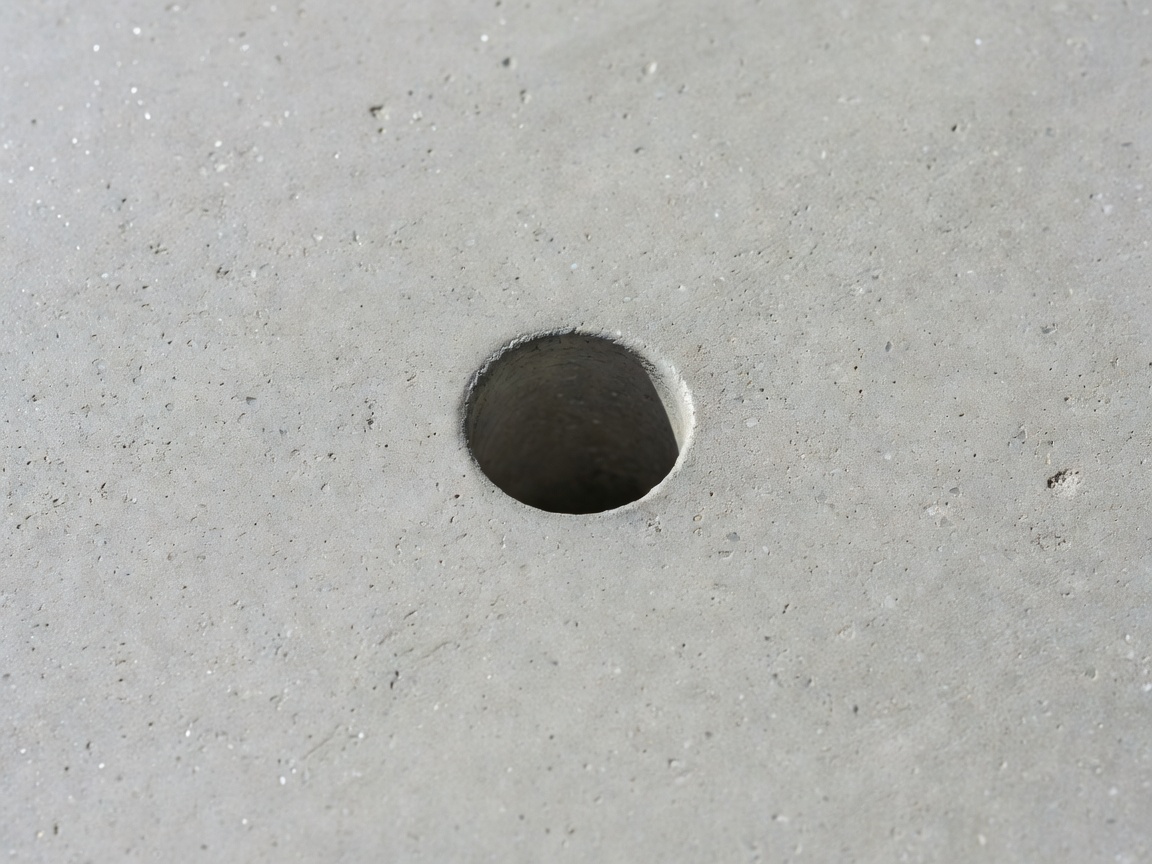
Macro texture of smooth concrete with a precision circular tie hole